Cameron has built a career at the intersection of research and innovation, from his early days as a sleep scientist to his current strategic role at Adelaide University, where he supports and strengthens research across academic portfolios. But beyond the world of grants, policy, and research strategy, there’s another investigation unfolding—one that doesn’t involve funding schemes, but fragments of family history scattered across the Netherlands. What started as curiosity has turned into something far more profound: a journey into his Dutch roots, uncovering wartime stories, long-lost relatives… and a past that, until recently, was almost entirely unknown.
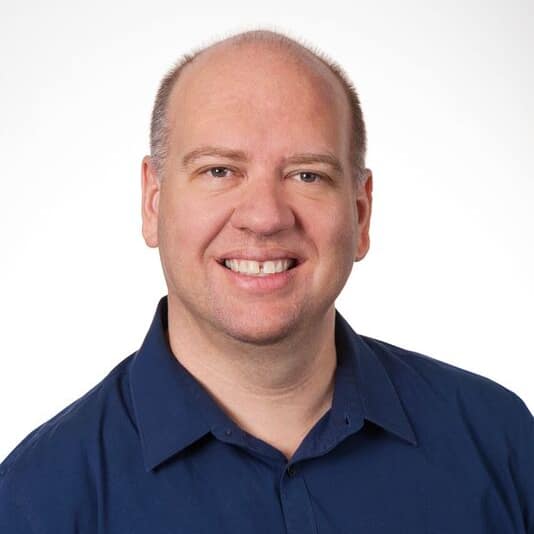
Interview by Vasco Bontje
1. What drew you into research and innovation, and what keeps you there today?
I was the first in my family to go to university and ended up in sleep research almost by chance. What really drew me in was the environment—working with a supervisor who encouraged us to enjoy the work while taking it seriously. I went on to complete a PhD and worked overseas, but eventually transitioned out of academic research due to limited funding in the field. I stayed in the university sector, though, moving into research support roles. Today, I focus more on strategic support for academics, and I still find it fulfilling because I can use my academic training to help others succeed.
2. How do you use your original academic expertise in your current role?
The specific subject matter isn’t something I use day to day anymore, apart from things like understanding fatigue and jet lag. What I really use is the training—how to think, how to solve problems, and how to approach questions systematically. That process of inquiry is exactly what I apply now when helping academics navigate grants, projects, and complex challenges.
3. How do you see your role evolving in a global and connected research environment?
My role has shifted from operational support to more strategic. I now work closely with leadership to improve research outcomes across groups of academics. Research is becoming more global and collaborative, and that brings both opportunities and challenges. AI is starting to play a big role in how research is done, and while it won’t replace people like me, those who know how to use it will have an advantage. At the same time, there’s a growing need to focus on researcher wellbeing, collaboration dynamics, and ensuring diverse voices are part of the process.
4. When did your curiosity about your Dutch heritage begin?
I grew up hearing stories about my father and grandparents, particularly around the Second World War. My grandfather had been in a labour camp near Lübeck, and my grandmother had moved there to be near him, working in a bakery. She became pregnant with my father during that time but sadly died about six weeks after he was born.
A lot of these stories were only partially known while I was growing up. More details only emerged later, especially after my father passed away in 2023, when we were preparing his eulogy. That process brought together fragments my family had remembered over time.
What really drove my curiosity was that my father knew very little about his mother’s side of the family. That sense of a missing piece—particularly on the Dutch side—made me want to understand more.
5. How did you uncover your family history and what did that process involve?
I only really started this journey after my father passed away. I began with DNA testing, which didn’t immediately give me clear answers but introduced me to genealogy platforms. From there, it became a process of gradually building a family tree—following leads, checking names, dates, and relationships.
It took a lot of time, often working on it in the evenings and weekends. I started by mapping out my grandfather’s side quite well, then moved onto my grandmother’s side, which was much harder.
A major breakthrough came when I discovered Dutch population records—“person cards”—which contained detailed information about individuals, including addresses, family members, and life events. With that, I could go back into genealogy databases and unlock much more information.
Through this process, I eventually identified 11 cousins on my grandmother’s side that my father never knew about. From there, I used social media and direct outreach to connect with living relatives, which really brought the whole process to life.
6. You shared a 1943 letter from your grandmother with me, which is a fascinating piece of family history. What did your grandmother’s letter mean to you?
The letter came to me through a relative I connected with in the Netherlands—someone I only found through this research. He had photos of my grandparents and my father, and also this letter my grandmother had written in 1943.
The first thing that struck me was her handwriting—very neat and beautiful. I couldn’t read Dutch, but once it was transcribed and translated, I could suddenly read her words. She wrote about everyday life during the war—mentioning not receiving mail, hearing bombings in Hamburg, food shortages but also having enough potatoes and vegetables, and even sending money home as a gift.
What stood out was the mix of ordinary life and the backdrop of war. It was quite a short letter, but incredibly powerful.
For me, it was emotional. She had always just been a name in the family—someone who died young and about whom we knew very little. Suddenly, I could better understand her experiences. Having that kind of direct connection to her life is quite amazing.
7. What does this journey mean to you personally and for your family?
It really does feel like putting together a puzzle. For me, it’s about discovering a part of my family that was always unknown. In some ways, it feels a bit like trying to understand a missing piece of identity.
I now have photos, letters, and stories that make people feel real—where they lived, what they did, what they went through. It turns names into actual people.
I do regret not starting earlier, because my father would have loved to see what I’ve uncovered about his mother and her family.
It’s also sparked interest in connecting with relatives. I’ve found a wide range of people—different professions, different lives—and I’d really like to meet them in person. Hopefully, I can travel to Europe and bring some of that together. It wouldn’t be a traditional family reunion, but more like meeting people you’ve just discovered are part of your story.
8. What would you recommend to others in the DutchSA community who want to explore their heritage?
There are many online resources available, both free and paid, so it’s easy to get started at your own pace. What helped me most was engaging with online communities and forums—there are many people willing to share advice and point you in the right direction.
That’s how I discovered key tools and approaches, like accessing Dutch records. Without that support, I would have struggled to make progress.
Also, countries like the Netherlands have excellent record-keeping—parish records, census data, and civil registrations—which makes it possible to trace family histories in quite a detailed way.
And beyond the research itself, there’s something meaningful about it. Visiting places, even gravesites, has been part of that journey. It’s something I never expected to do, but I found myself standing in front of the resting places of my great-great-grandparents in rural Victoria, seeing their names carved in stone. It brings a real sense of connection. It’s been grounding, and in many ways, deeply rewarding.