
— An interview with Tony de Maaijer on opportunity, persistence, and giving things a go
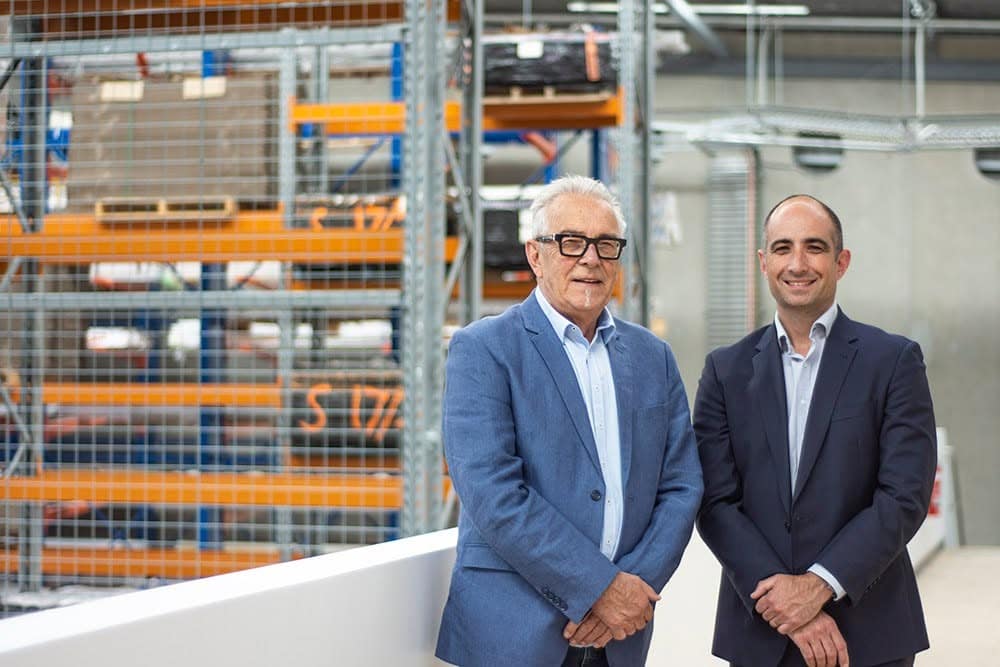
Tony’s journey from Amsterdam to South Australia started, somewhat unexpectedly, with a cheap cruise ticket from Canada to Australia and the promise of very affordable drinks onboard — a perfectly reasonable motivation for someone in their early twenties. What followed, however, became a story of curiosity, persistence, and recognising opportunity.
Best known as the founder of Ziptrak®, Tony reflects on how frustration led to innovation, and how a willingness to “give things a go” shaped both his business journey and personal philosophy.
An interview by Vasco Bontje
You lived and worked across the Netherlands, Canada and Australia. What did each country teach you about business and where did you feel most at home?
Entrepreneurship comes from within the person. Even growing up in Amsterdam, I already had paper routes and was making money in different ways. I started developing skills and working for myself quite early.
I went to Canada mainly to escape the social pressures of Amsterdam. Canada was comfortable, maybe even too comfortable. Then I saw an advertisement for a very cheap cruise to Australia and thought it sounded like an adventure. At the time, the cheap drinks onboard were probably one of the stronger selling points for a twenty-something Dutchman as well. But the cruise turned out to deliver much more than an affordable holiday — on the boat I met the girl of my dreams, Gustie, who later became the mother of our children. The more people told me not to go to Australia, the more I wanted to go.
When I arrived in Sydney in 1970, it was a culture shock. But within a few years I had my own restaurant because I always wanted to work for myself and take opportunities.
Later, after living in Sydney for about 13 years and with my son growing up, Adelaide felt like a better place for more space, affordable schooling, and a better lifestyle.
Looking back at your move from Canada to Australia, was it a gut decision or a calculated one?
It was calculated in the sense that, as a twenty-year-old, it sounded like an incredibly cheap holiday on a cruise ship with cheap drinks. At that age it didn’t feel like a big thing. But looking back, it probably was. I just wanted to give things a go.
Furthermore I met my darling wife Gustie on board that cruise ship all those years ago.
What was different about Adelaide compared to Sydney in the 1980s?
Adelaide was easy. Easy to get around, easy to find a house, and easier to start something.
Before moving, I placed an advertisement in a Sydney newspaper saying I was a businessman moving to South Australia and looking for opportunities. I received dozens of responses from people offering products and business opportunities.
One of those opportunities was roller shutters. I thought I could do that because I’d always worked with my hands and renovated houses. There were not many people doing it at the time, so I started in shutters and it became quite successful.
How did the idea for Ziptrak® come about?
The idea came from irritation.
At the time, outdoor blinds had zippers down the side and you had to manually roll the whole thing up and down. They were heavy and awkward. I couldn’t honestly leave those systems with customers, especially expecting someone to lift and roll them by hand.
I thought there had to be a better way.
Because I had a sailing background in the Netherlands, I remembered how sails ran through tracks on a mast. That gave me the inspiration to run blinds inside tracks instead of rolling the entire blind down.
The roll stayed at the top and only the fabric moved. That’s how the concept developed.
How much of your success comes down to luck versus persistence?
Timing and luck matter, but opportunities have to be grasped. Everybody gets opportunities in life, but you have to recognise them and act on them.
Nothing happens without persistence. Most things fail at first. Your first attempt is rarely earth-shattering and sometimes you fail many times.
Persistence is what eventually brings success if you truly believe in what you’re trying to achieve.
If you were starting again today, what would you do differently?
You can never do exactly the same thing because circumstances constantly change.
But you still need the same mindset: persistence, openness, and receptiveness to opportunities. You have to keep the door open mentally and be willing to try things.
Sometimes things work and sometimes they don’t, but you have to give them a go. For that, Australia is a fantastic country.
Do you see any typical Dutch traits in the way you approach business?
My Dutch background taught me how to “make do”.
I know how to tighten my belt when things are difficult. You cannot just spend yourself broke buying expensive equipment and machinery. I’m very good at making things out of almost nothing, even from scrap materials.
That frugal mindset came from my upbringing. My father always said: “If you can’t afford it, don’t buy it.”
We grew up with very little compared to today. We got one toy for Sinterklaas and one for our birthday. Things were built to last and people valued what they had.
What excites you most about the future for the next generation of entrepreneurs?
Business will always look after itself where there is a need but what concerns me more is the state of the world and whether we focus enough on quality of life and helping others rather than only enriching ourselves. For example; education is everything. I think wealthy countries should help developing countries more directly by sharing education, knowledge, and opportunity rather than only pursuing profit.
And for the aspiring and younger generation entrepreneurs, I would say: don’t look away from problems. Be persistent, stay open-minded, keep learning, and try to contribute something positive beyond business alone.